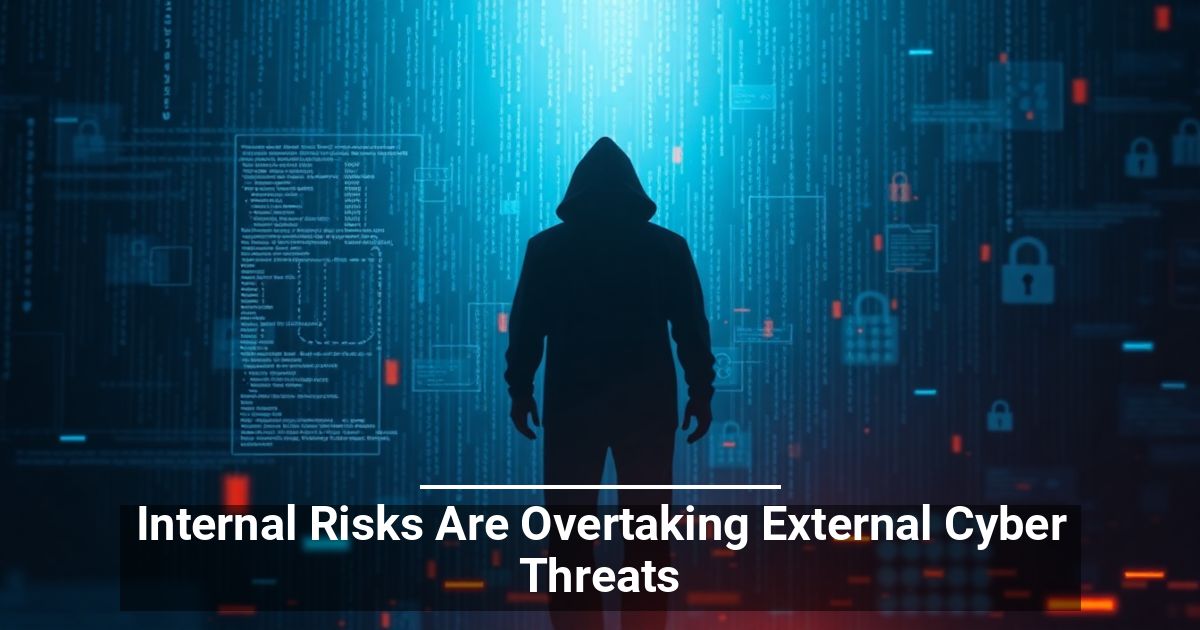
 Business owners expect their employees to help protect the organization's technical systems and sensitive data. Unfortunately, internal cyber threats are now the biggest risks organizations face. While external hacking accounts for about 31% of attacks, employee misuse increased from 29% to 45% between 2024 and 2025.
The good news is that businesses can take steps to protect themselves from employee cybersecurity risks.
How Malicious Insider Activity Occurs
Unfortunately, malicious insider activity, such as the abuse of privileged access, does occur. It's important to note that not all cases of employee misuse are malicious. Workers can inadvertently help hackers gain unauthorized access to data by using unapproved software or security workarounds that leave systems vulnerable to exploitation.
Sensitive data exposure from employees isn't limited to computers and servers. End-user mobile devices, such as laptops, mobile phones, and tablets, are the most at risk.
Organizations may have firewalls and other cybersecurity features in place to prevent threats from manifesting. However, employees may bypass them on endpoint hardware, increasing the risk of hackers accessing systems containing sensitive information.
According to research from Orange Cyberdefense, incidents concerning identity and credential access rose from 10% to 17%. This finding suggests that cyberattackers are aware of employee misuse patterns and are learning how to exploit them more efficiently.
Which Businesses Are At Risk?
Small businesses and large companies face the highest likelihood of cybersecurity issues related to employee misuse. Small businesses sometimes have fewer resources and less restrictive policies for insider threat prevention. Yet larger enterprises have more employees and rely on multiple systems, making it easier for internal cyber threats to occur.
Regardless of an organization's size, employee cybersecurity risks can escalate when the business lacks visibility into how its employees use systems and accounts.
What Organizations Can Do To Protect Themselves From Internal Threats
Although employee cybersecurity risks are on the rise, it doesn't mean businesses should avoid implementing firewall protection or using basic antivirus software. Taking these steps is necessary to protect systems from unauthorized access. However, organizations must go beyond routine cybersecurity protection if they have concerns about internal cyber threats.
Insider threat prevention strategies may include:
- Restricting access to or use of unapproved software and external applications that may create security vulnerabilities
- Using endpoint protection and device management tools to secure employee devices
- Requiring multi-factor authentication for company accounts as an additional security measure
- Encrypting sensitive business data to prevent exposure on compromised devices
- Establishing clear cybersecurity policies to set expectations with employees
Cybersecurity awareness training is also necessary. Investing in this training can help employees understand how everyday actions and shortcuts create security risks for the business. When workers learn to recognize phishing attempts, suspicious software, and unsafe practices, they are less likely to engage in unintentional misuse.
Businesses can no longer assume the greatest threats to their enterprises come from external hackers. As internal cyber threats continue to grow, businesses that strengthen employee oversight, access management, and cybersecurity awareness training will be better prepared to reduce risk and protect sensitive business data.